
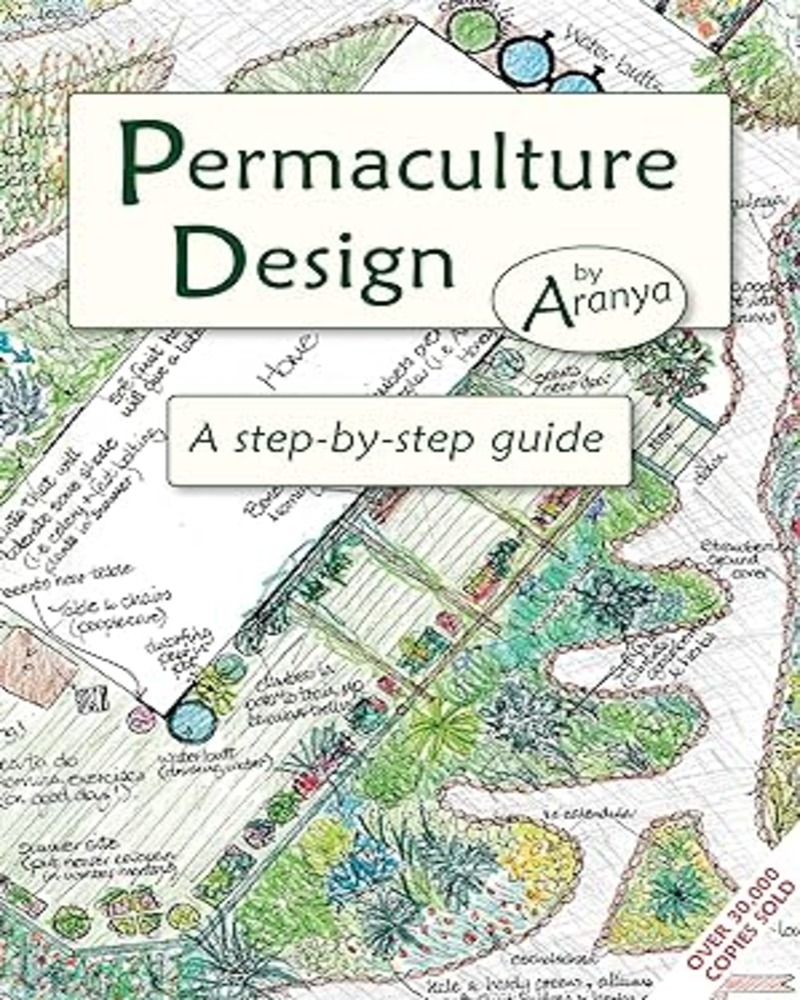







Permaculture Design: A Step-by-Step Guide
Are you excited about permaculture but unclear how to put it into practice for yourself? In this unique, full colour guide, experienced permaculture teacher Aranya leads you through the design process from beginning to end, using clear explanations, flowcharts and diagrams. It is based on course worksheets which have been designed, refined and tested on students over time. Linking theory to practice, he places the ethics, principles, philosophies, tools and techniques directly into the context of the process itself. While written for anyone with a basic grasp of permaculture, this book also has plenty to offer the more experienced designer.
This guide covers: Systems and patterns ~ Working as part of a design team ~ Land and non-land based design ~ Design frameworks ~ Site surveying and map making ~ Interviewing clients ~ Working with large client groups ~ Identifying functions ~ Choosing systems and elements ~ Placement and integration ~ Creating a design proposal ~ Project management ~ Presenting your ideas to clients ~ and much more.
A great reference for anyone who has done, or is thinking of doing, any kind of permaculture course.
Nice 'pocket' size(if you have big pockets) to take it outside while gardening.
Wer etwas Vorahnung hat, um was es bei PK geht und auch schon seinen grünen Daumen benutzt hat, wird mit diesem Buch gut angeleitet, Land permakulturell zu gestalten. Allein oder in einer Gemeinschaft, sehr individuell. Schritt für Schritt wird erklärt, wie ein Plan vom Land entsteht (Ressourcen, Schwächen, Wünsche zusammentragen, Gegebenheiten vor Ort, Vermessung, Anfertigen einer Karte,...)
Sehr gelungen finde ich auch die Methodensammlung um kleinere und größere Gruppen voranzubringen und über Differenzen hinwegzuhelfen, Ziele zu definieren, etwas Gemeinsames wachsen zu lassen.
Sehr fundiertes Buch von einem kompetenten Autor der auch über die Arbeit mit Gruppen bescheid weiß.
The book is a bit of a slow read if have already read Permaculture: A Designer's Manual by Bill Mollison, and that would indicate Aranya took sufficient time to explain the basics to someone with no prior knowledge of permaculture. There is redundancy in the book, but again, this book is meant for anyone to be able to read in any order, so yeah, I think the author's objective for the book was accomplished.
I did learn some new things from this book, too, so I find my time and money was well-spent on this book.
Such a great guide for those like me who will be starting from scratch with no design background
Will need a month or two of dipping into
Kathryn
This book should cost a lot more.
I've *just* received mine and have only skimmed it so far but I am elated. It's even more thorough and hands-on than I had hopes and I am absolutely tickled.
If you're trying to figure out whether this book will actually be useful, and you're not already a certified permaculture designer (heck, perhaps if you *are*), this book will make you happy. It's awesome, and I highly, highly recommend it.
I highly recommend it for those starting out as I did. My sense is that it would useful to experienced practitioners as well.
I did however dislike that author refers you to his website for information that just as easily could have been in the book. What is the point of buying a real book if you still have to use the internet to get all the content. I would recommend that Aranya put this info in the book in future editions (which I expect their will be). Aranya could also polish the hand drawn graphics to be a better example of what effective landscape design graphics can look like.
These two points are fairly minor when considering the whole book and it still received five stars from me.
I have not found any one of the multitude of Permaculture books on the market to be as easy-to-understand and as inspiring a read as this one. Many thanks to Aranya for this gem of a book.
This book is meant to be used out in the field and crimped up....a working tool and having taken a design course is worth every penny and more. I bought several copies and plan to share them with other...you will too.
It is top quality heavy gloss paper (FCS sustainable certified) with color photos.
Aranya provided an index to other references and even a website of his own that provides larger pictures in the book, along with much more.
One of the best Permaculture books I have (along with Peter Bane's new book, "Garden Farming for Town and Country". Buy both at the same time and also view these two on Youtube for a at home permaculture course.
Here, in this packed volume, there is a wealth of techniques and strategies for the newby and the not so newby alike. I am enjoying the read and I am recommending this book to all my students at Gaia University.
Thanks for gathering all this together Aranya and thanks for explaining it all in your clear, informal and yet complete style ...
Good job!
I understand the importance of the permaculture design class and the impact it has on your thinking and your way of life. So I take the information gained during that designer class very seriously, no book will ever replace the designer class but it can serve as a preparation tool or to fill in gaps that might not have been covered in as much detail as you would like in the 72 hour designer class. For me, I wanted to look at the organization tools and the way that Aranya organized the flow of the mass amount of information to be gathered, evaluated, and organized to create a final permaculture design. And this book did not disappoint me. The book was full of information to assist you in the creation of your design from start to finish using simple tools, freely available software, and professional advice.
The book is organized in three major sections, the first covers the preparations which include observation skills and a brief description of the concepts of permaculture along with working with groups and conflict resolution. The second section covered the design process with details on the site survey and an excellent section on basic map types, map making using basic tools such as compass and measurements, and how to create your own maps, flowcharts, sector and solar maps, and soil type. Additional discussion on the client interview process, goal setting, choosing your systems and elements, and finally starting to create a design proposal of your thoughts and client wishes. The next information provided are details of how to organize the project using time lines, Pert and Gantt charts, the creation of a maintenance plan, resource list and finally how to create your formal presentation to the client. The third section provides information on organizational tools labeled incremental design that include additional flowcharts, mind mapping, the use of a diary, social structures and interaction between various networking groups for social stability and sustainability. Appendices, a resource list and glossary are also provided. The book is heavily illustrated with color images of every phase of the design process, and descriptions of computer based software are also provided as a guide to making professional presentations and reports using open source software, freely available to everyone at no charge.
The book was a pleasure to read, well thought out and presented with a desire to educate but also inspire us to make changes, changes in our own lives and for the good of the ones around us, changes of future generations to come by showing us just how easy it is to make those changes.