
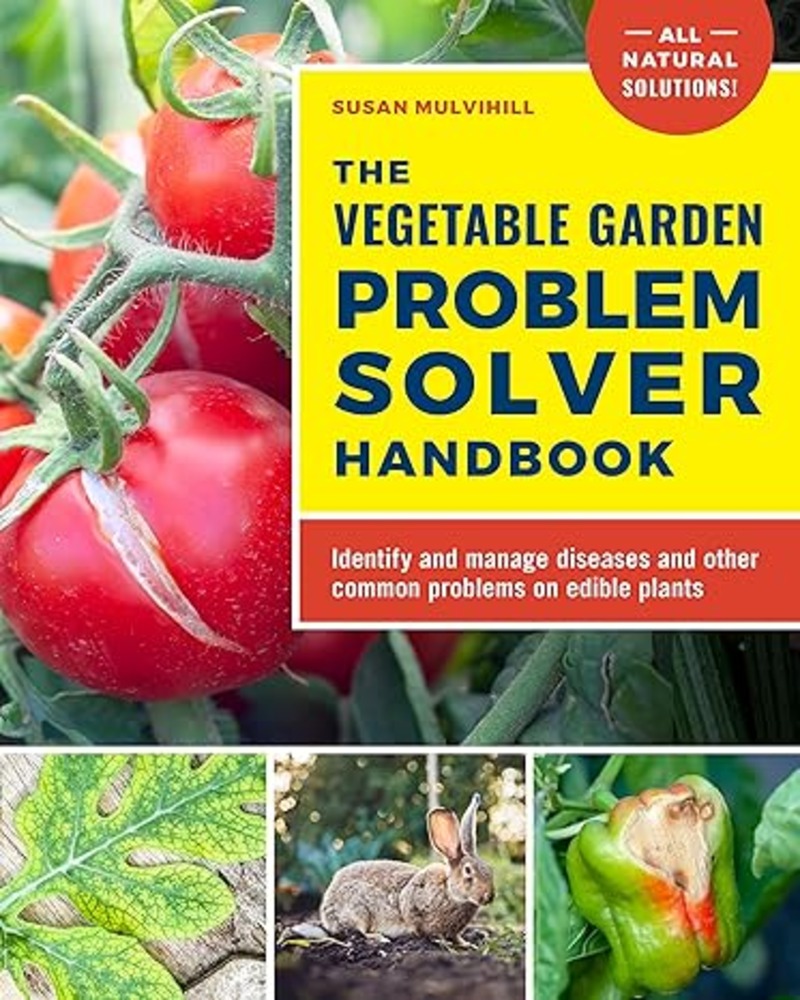
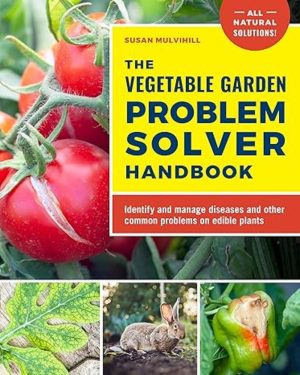
If you’re tired of battling blight on your tomatoes, losing your basil to downy mildew, and watching deer raid your vegetable garden, you’ll find all the answers you need right here.
*2024 American Horticultural Society Book Award Winner*
In The Vegetable Garden Problem Solver Handbook, author and veggie-growing guru Susan Mulvihill of YouTube’s Susan’s in the Garden is ready to set you up for long-term success in the vegetable garden. In these pages, Susan hands you all the info you need to stand firm against plant diseases, viruses, disorders, stressors, and even animal pests, and to do it without having to turn to harsh synthetic chemical products. All-natural solutions to your worst gardening woes are featured in an organized, problem-by-problem manner that makes this a quick and useful reference for both beginner and expert gardeners. This book is a wonderful companion to Susan’s previous book, The Vegetable Garden Pest Handbook, which covers organic solutions for managing insect pests common in home veggie gardens.
In this book, not only will you discover how to get your plants off to a healthy start, you’ll also find out how to properly identify plant pathogens, how to troubleshoot problems like pollination issues and weather-related disorders, and how to prevent ailments such as fruit cracking, leaf roll, and blossom end rot.
In addition, Susan hands you natural solutions to:
- Over 28 bacterial and fungal diseases, including nasties like powdery mildew, potato scab, and leaf spot
- Limit damage from plant-eating animals, including birds, chipmunks, rabbits, groundhogs, gophers, deer, and 8 other critters
- Manage a dozen physiological disorders common to the veggie garden, including bitterness, bolting, and sun scald
- Prevent problems before they occur using the many strategies detailed throughout these pages
Keeping vegetable plants healthy and productive is no easy task. An extensive quick-reference chart is included to help with identification and to direct you to the best possible solutions based on both the symptoms you see and the vegetable those symptoms have appeared on. This truly is THE guide every vegetable gardener has been waiting for!





Disclosure statement: A complimentary copy of this book was provided from a tour group, publisher, publicist, or author, including NetGalley, OR was borrowed from the library, including OverDrive, OR borrowed from Kindle Unlimited, OR purchased. A review was not required and all views and opinions expressed are unbiased and my own.
There are wonderful color photographs throughout the book, and many extremely useful tables, particularly in the second section, entitled "Vegetable Plant Disease Guide." (A page and a half devoted to problems with tomatoes! Much appreciated!) The third chapter, "Critters in the Garden," features little sections on 15 kinds of critters, from birds and rabbits to opossums and even porcupines.
All this and so much more is presented in an easily accessible format. This is a great book to have on hand. Most highly recommended!
The book covers a number of topics with a focus on bacterial, fungal, and viral diseases of plants and how to address them, and how to minimize the risk of disease. Others have commented on the scant attention paid to insects that plague vegetable gardens (a topic I understand the author has covered in another book) but this was not a drawback in my eyes, perhaps because I am familiar with the garden pests in my region and how to deal with them (without using poisons).
Overall, a useful reference for anyone who grows vegetables.
The book’s made of heavy, high-quality, coated paper and is cross-indexed for easy use. Sure, the info can be found digging around on the internet, but it’s just easier to avoid that rabbit hole and just look in the book. Who wants to look at a screen on a nice sunny day anyway?
I grow tomatoes peppers flowers and trees, in the Midwest outside, and inside (over winter) and have already made watering adjustments to avoid common problems.
If you haven't followed Susan's Youtube or FB pages, don't forget to do that too! Her calm, encouraging, and good hearted/experienced nature will inspire you to try new techniques, grow food for birds and pollinators, and expand your harvest and type. You won't be disappointed in this book or her social media content. Thank you, Susan, for making this and the bug prevention book so accessible to all types of gardeners. You have a true gift.
The book starts off by outlining basic gardening tips - soil care, spacing and fertilizing - and then dives right into the problems. It covers physiological disorders with plants and how to fix them - diseases from powdery mildew to blight, and also provides guidance on how to eliminate some of the most common garden pests. The disease section is incredibly well organized, and groups diseases by the plants that affect them. It's in table form, and easy to find exactly what you're looking for. The methods for solving those problems are natural and organic in nature.
The book is also bursting with full color photos to help identify your plant's problem.
Susan Mulvihill has written a fantastic reference book for gardeners of any skill level. It absolutely deserves a space on your shelf.
The section on "bugs" is far too cursory, and that's the main weakness of the book. Only ten are pictured and described despite many more being named elsewhere in the book as disease vectors. You will have to purchase a companion insect and pest identification and eradication guide because not much is useful here. The ability to distinguish between beneficial and destructive pests is essential for early prevention and treatment.
I appreciate the section on how to animal pests out of the garden. For example, too many guides ignore groundhogs, chipmunks, and raccoons as destructive creatures, probably because it's so difficult to keep them out of a thriving garden. But this book offers a few strategies to each, even if they may ultimately fail, despending on the ingenuity of the animals on your property.
I expect to page through this book throughout the upcoming growing season. I'm glad I was able to read it before I tackled my year's gardening since I'll be armed with more information than I was in years past.
-- Debbie Lee Wesselmann
(I received a review copy of this book with no expectations.)